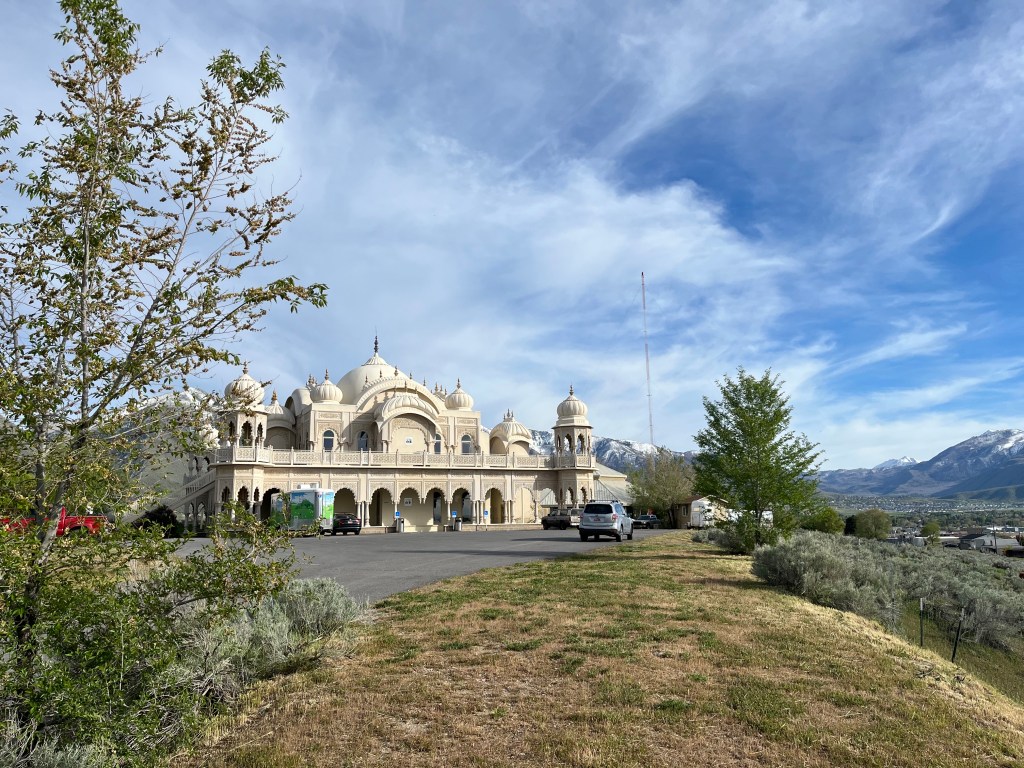
Everyone is their own person here at ISKCON in Utah. Even while being amidst so many people, one is bound to be alone. That’s the way of life here. Life can be shared and sustained, but never compromised in the name of company.
I very well remember the excitement and the nervousness that I felt the night before I was supposed to be taking off. I came across the place that I had chosen for my workaway over a year ago. I recall, albeit vaguely, what I had imagined myself to be like once I got here.
I’m thinking back to my 13 year old self, standing at the edge of my tiny balcony overlooking the narrow lanes of my hometown in India; walking with a tremble in my eyes, while I imagined myself standing at the edge of the Aurland Lookout in Norway. This is what dreams were made of. They were stitched and put together in place by newspaper and magazine clippings, held on by the glue of hope. I knew this day would come, when I’d go off someplace, far from home, far from everything familiar. However, when that day actually loomed, the giddiness evaporated in thin air and rained upon me as an anxious outpouring.
I had always been driven by an overwhelming urge to move, but that night, the pull of the familiar and the comfortable was steadfast.
This feeling, however, evaporated as soon as I stepped outside of the airport. When I arrived in Utah, I found everything to be leading me to the temple.
The Utah breeze, carefree, quiet, and perhaps a little sultry, expanded gradually as I got a greater view of the surrounding ice-capped mountains. The shades of green and brown peeked through the mostly white overcoat, while the clouds occasionally gave way to the highest points of the range.
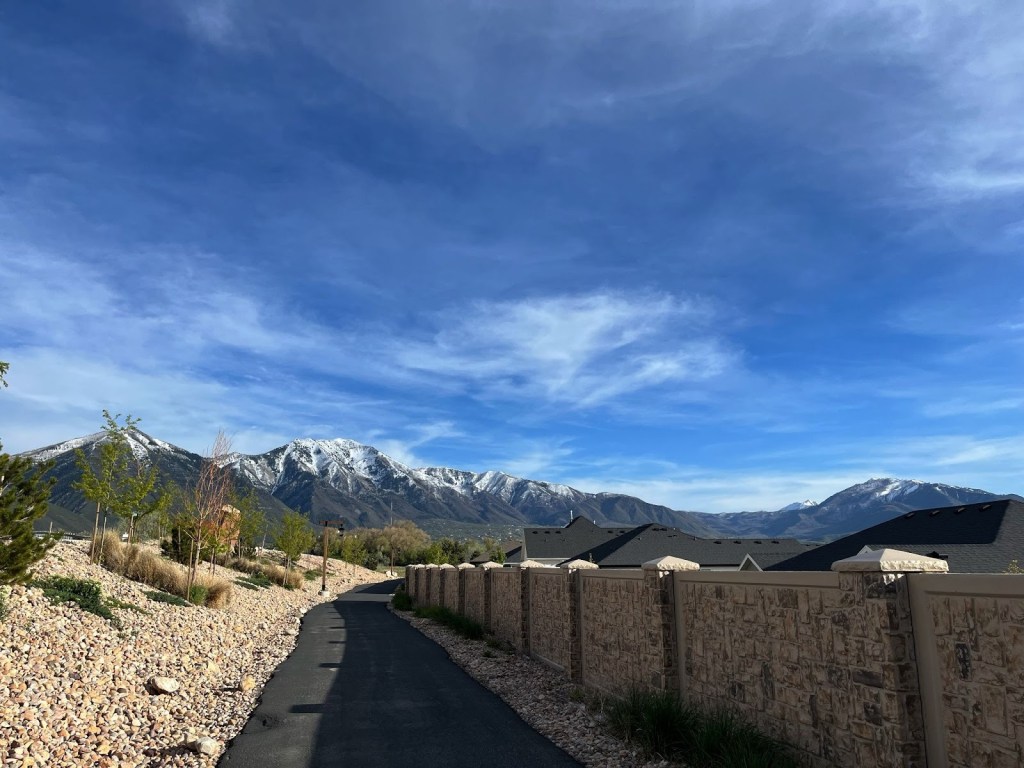
People showed up along my path, guiding me through the metro to the city, and then on the front runner train towards Provo, before two lovely women ultimately helped me get to the temple, taking the time away from their own day to help a stranger who they will perhaps never see again.
The bus driver kindly dropped me off right at the mouth of the entrance to the grounds of the temple, a tiny path surrounded by [these kind] of bushes. Every step walked closer to the temple illuminated the vastness of the neighboring landscapes. Miles of farmland skirted the hilltop where the temple was situated, slowly fading into the neighboring hills and mountains of the Wasatch Range.
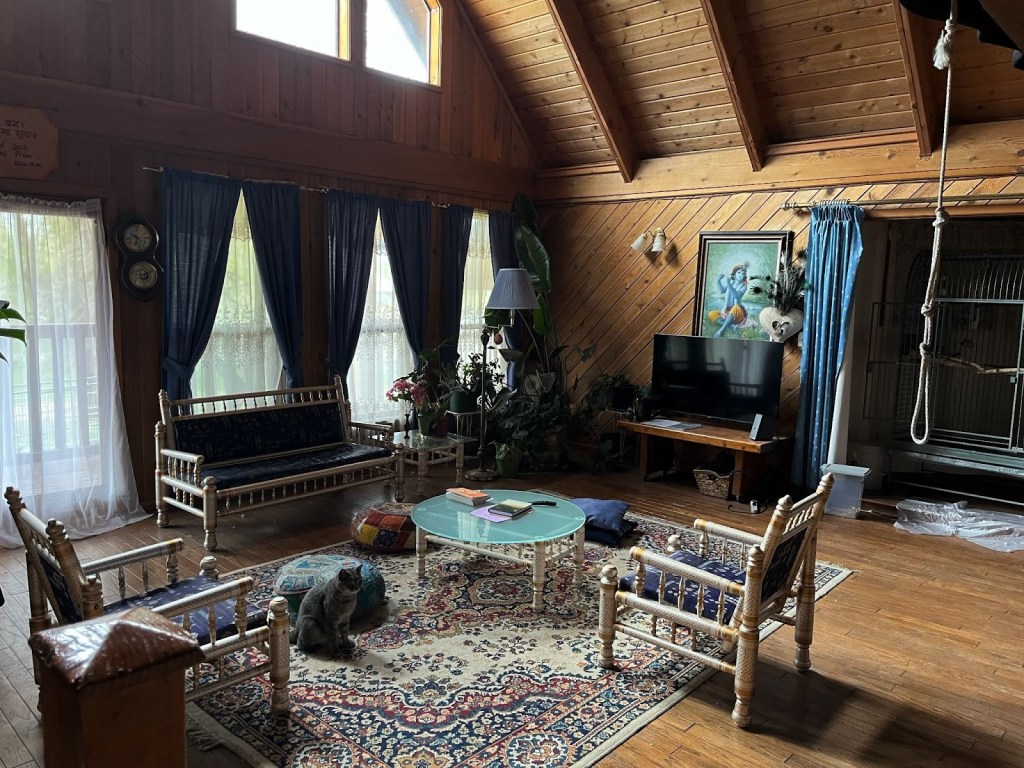
The living quarters at the temple were simple but adequate. A rustic living space that had been a labor of love for Caru, Vai, and many others who had the dream of gracing that piece of land with the presence of the holy. The cottage was built over a period of months by volunteers who wanted to contribute in curating a community for like minded devotees, a place where people with shared interests would come together and focus on community building surrounding the teachings of Krishna Consciousness.
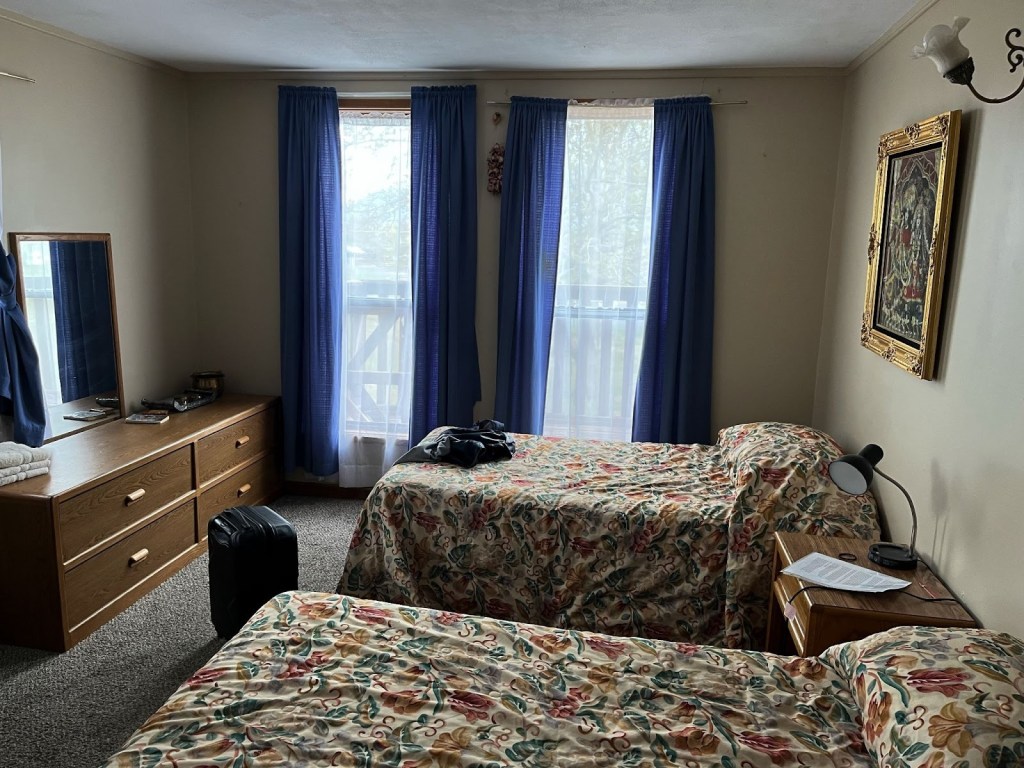
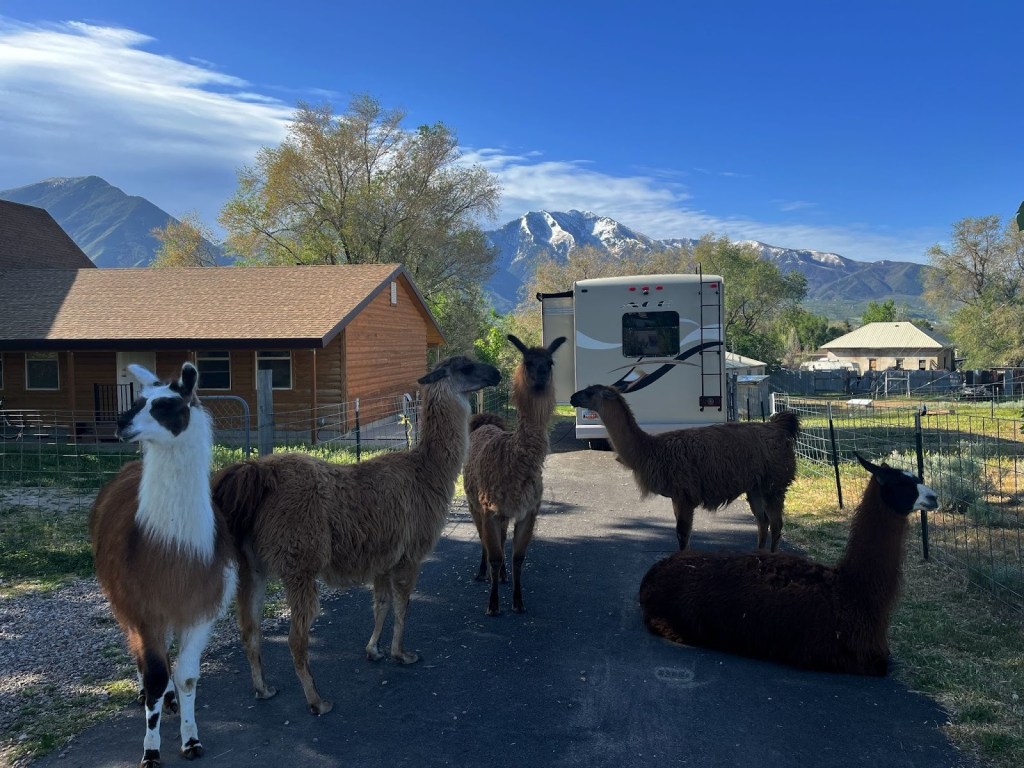
My first day at work, I was awoken by a chilling breeze that swept through the open grazing lands and crept in by the slightly ajar window, beckoning me with a little whistle as it sneaked up to my bedside.
I opened up the flimsy curtain, only to be greeted by a layer of freshly covered snow on the surrounding peaks.
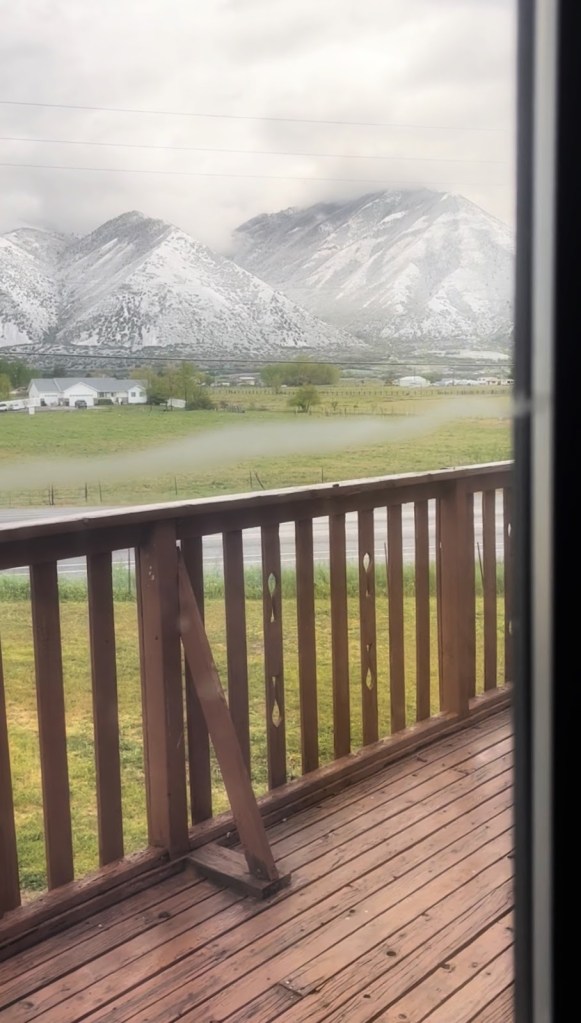
Over the week, my days started abiding by a constant rhythm.
Waking up at 8AM, having breakfast with fellow volunteers, working from 9:00-13:00 in the morning, having lunch with my crew, laying in bed while I caught up with my social media, going for evening walks in the rural farmland and the neighboring living communities, followed by dinner, occasional game nights, and sleep.
One thing that was never consistent was the ever-evolving weather.
Freshly fallen snow, which was visible in the wee hours of the morning, would quickly melt as the day allowed for the sun to shine through and gave way to perpetually changing sunset hues.
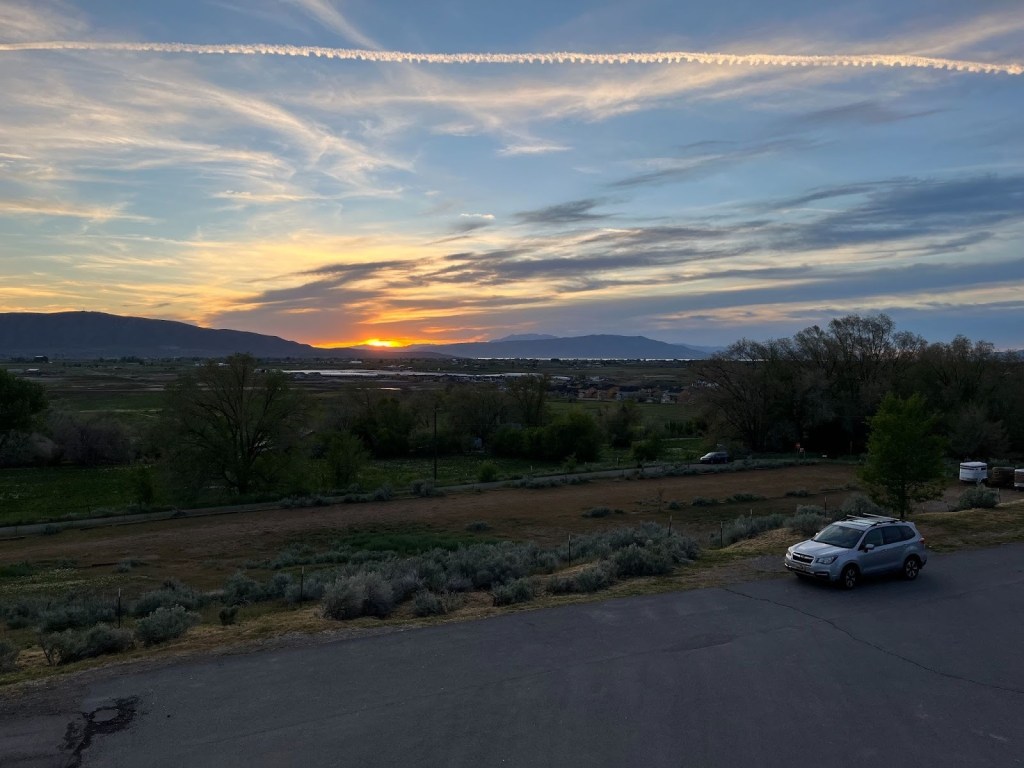
The climate was never stable, however. Like two water bodies mingling in some sort of an undefined border dance, two distinct atmospheres were often visible in the periphery if one looked close enough.
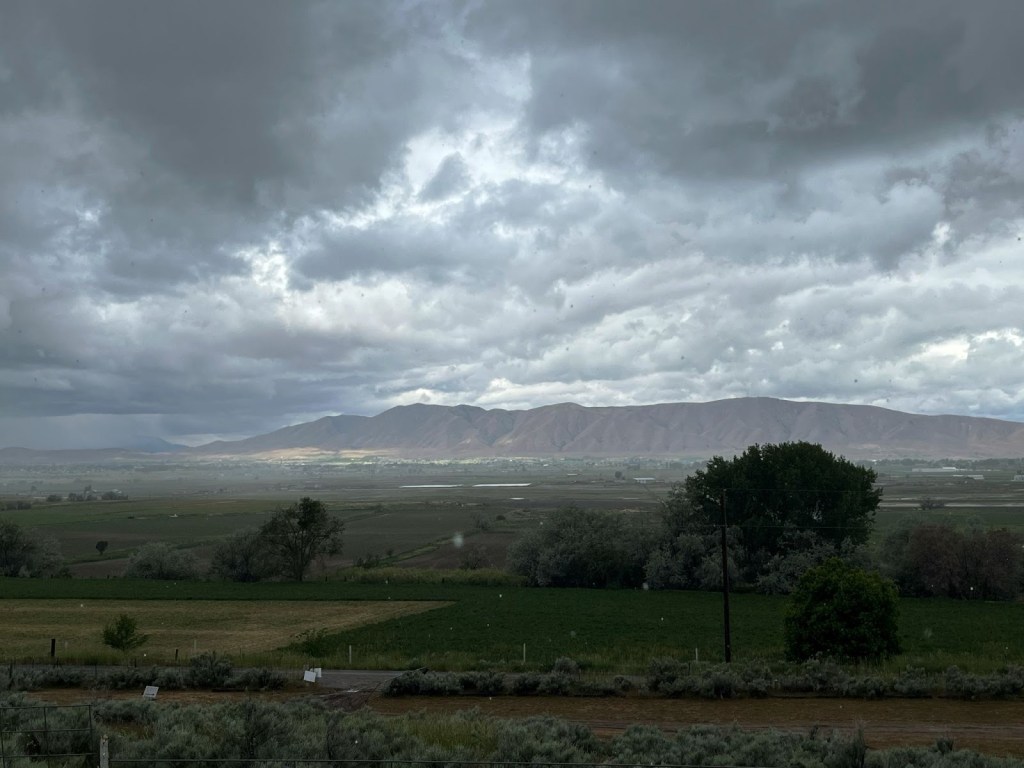
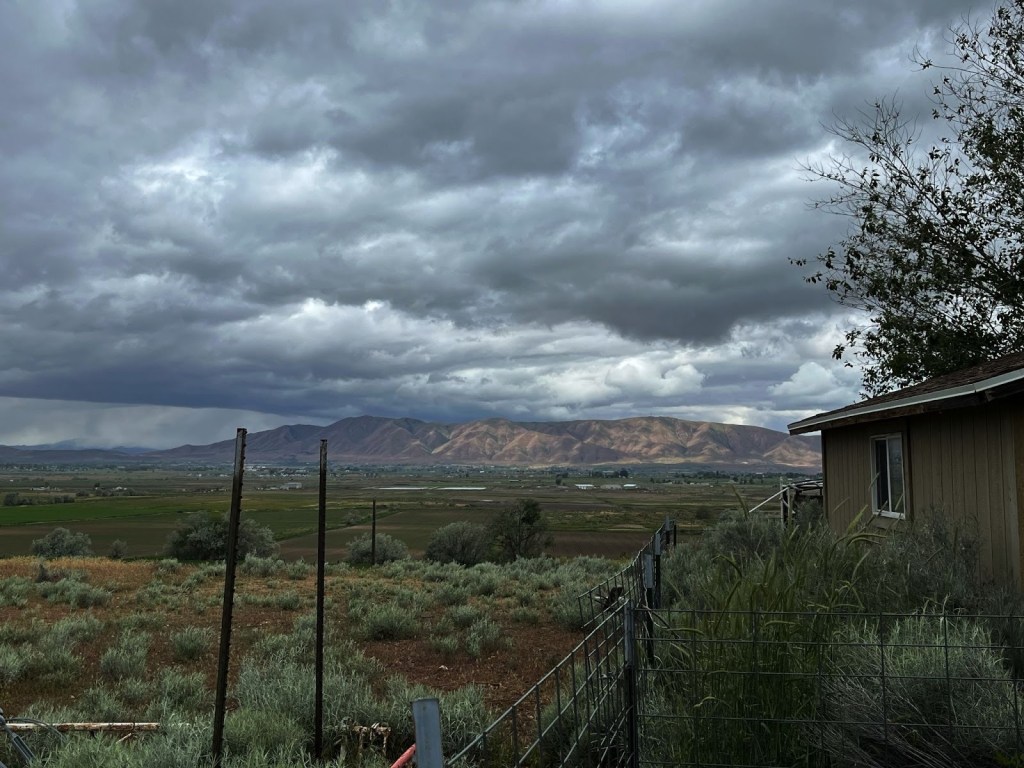
The open farmland which stretched for miles, allowed me to take a closer look at the meeting of two separate horizons teeming with a life of their own.
Separate, yet so intricately woven together, that a mere glance of the sun at a distance drenched me in a warmth while being soaked in the downpour of the aggressive storm hovering right above me.
“If we open people up, we’d find landscapes,” mused Agnes Varda in her last documentary before she passed, titled The Beaches of Agnes.
I understand what she meant, I think.
In retrospect, I found myself responding to the evolving landscape. Open land came with an open mind, more time to think, more opportunities to introspect, and fill in the hollowness with the things of affection.
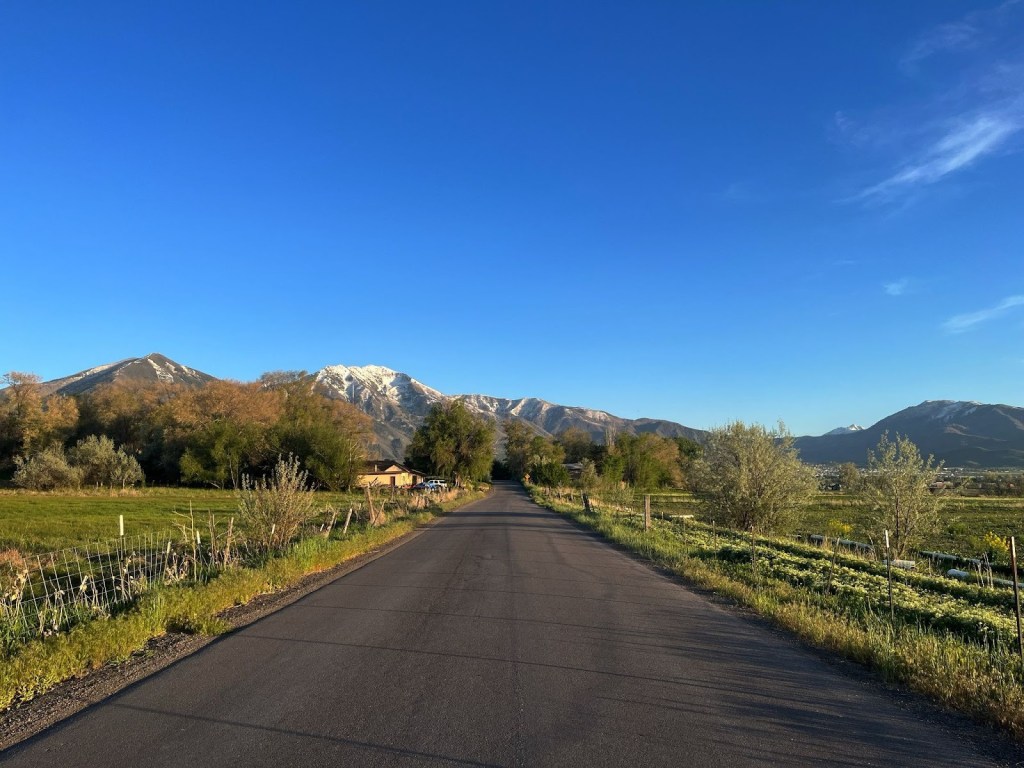
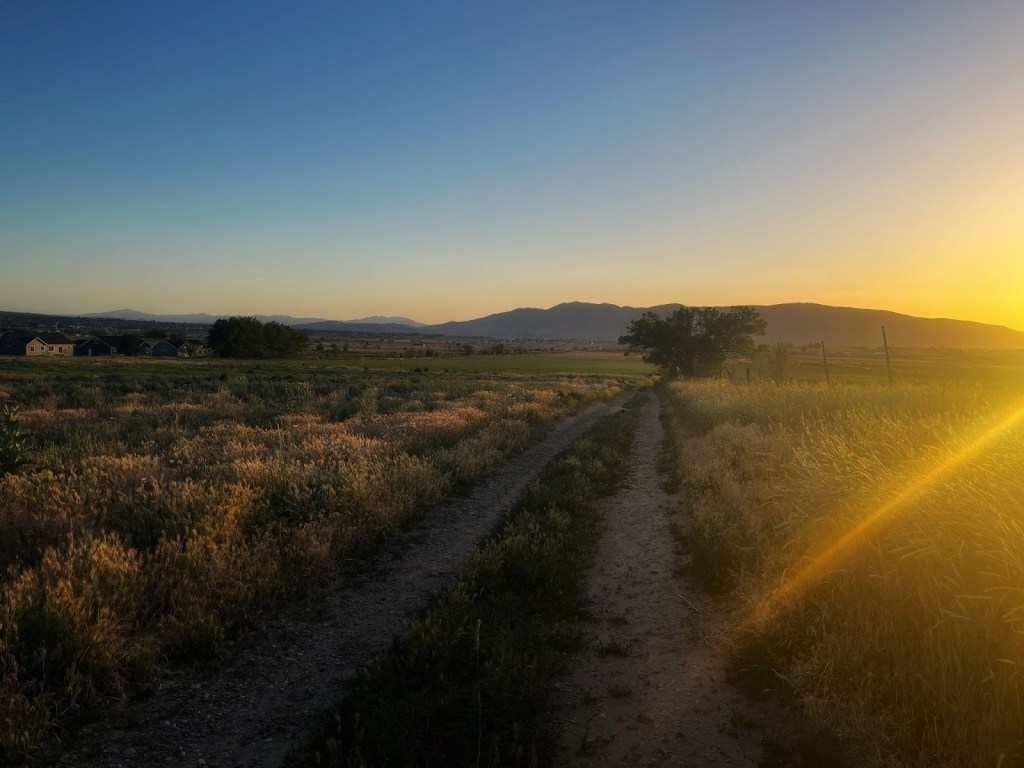
The unfolding of the landscapes and the blurry boundaries of it gifted me with a sense of perspective, of things that are yet to come, things that exist in the present, things that have already passed me by, and the uncertainty often associated with differentiating the former from the latter.
Thoughts flew through me uninhibited, taking the form of the winds blowing unobstructed over the prairies and the farmland.
“If one lives long enough, circles close,” mused Isabelle Allende in her wonderful historical fiction called A Long Petal of the Sea. As I sit here on the patio of the cottage that has been my home for the past 3.5 weeks, I’m thinking about what circles have unfurled themselves. Have any lines of destiny tangled up so delicately that I can’t trace it into incomplete circles anymore? Or, have any circles closed and whether my vision, being unlike the fan of the peacock sprawled in front of where I sit, runs pretty much in a straight line? I suppose the answers to these questions will reveal themselves in hindsight too. There’s no rush here. Life goes by at a lowly pace.
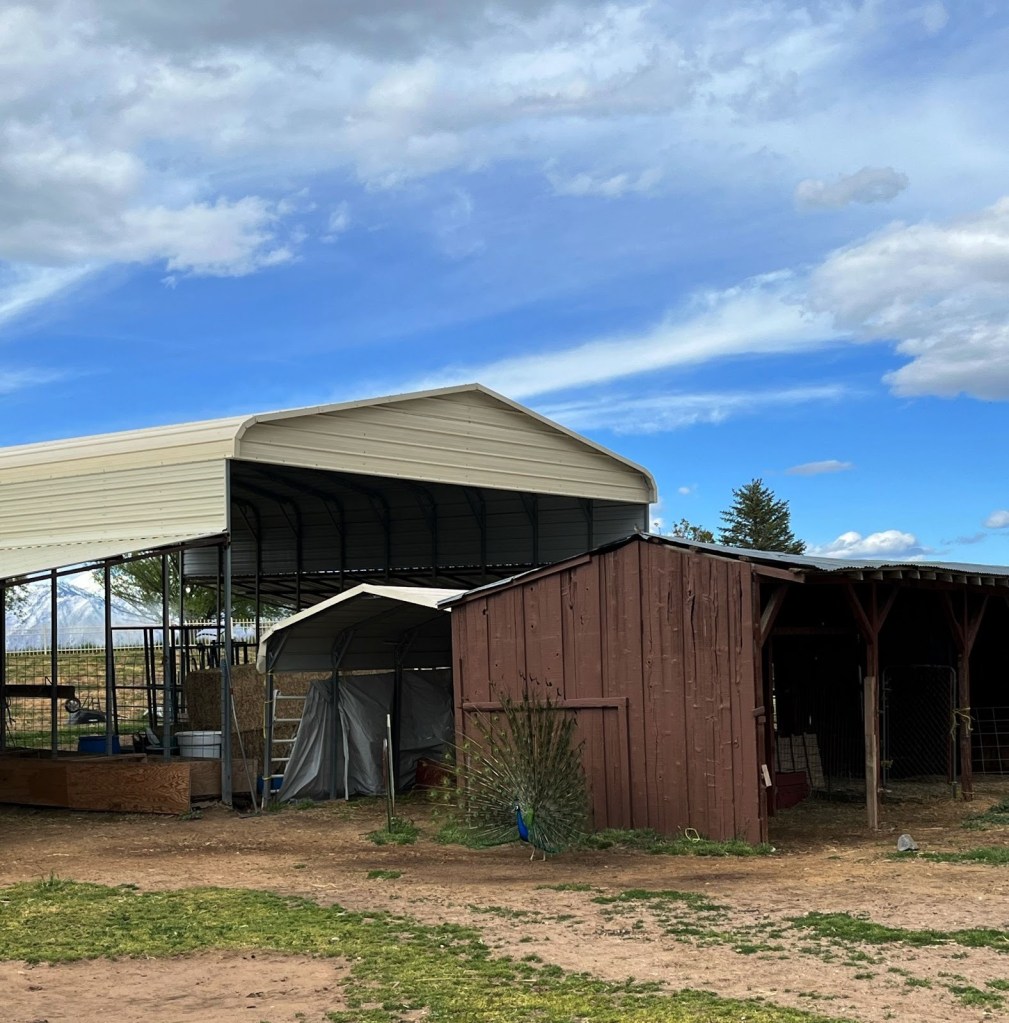
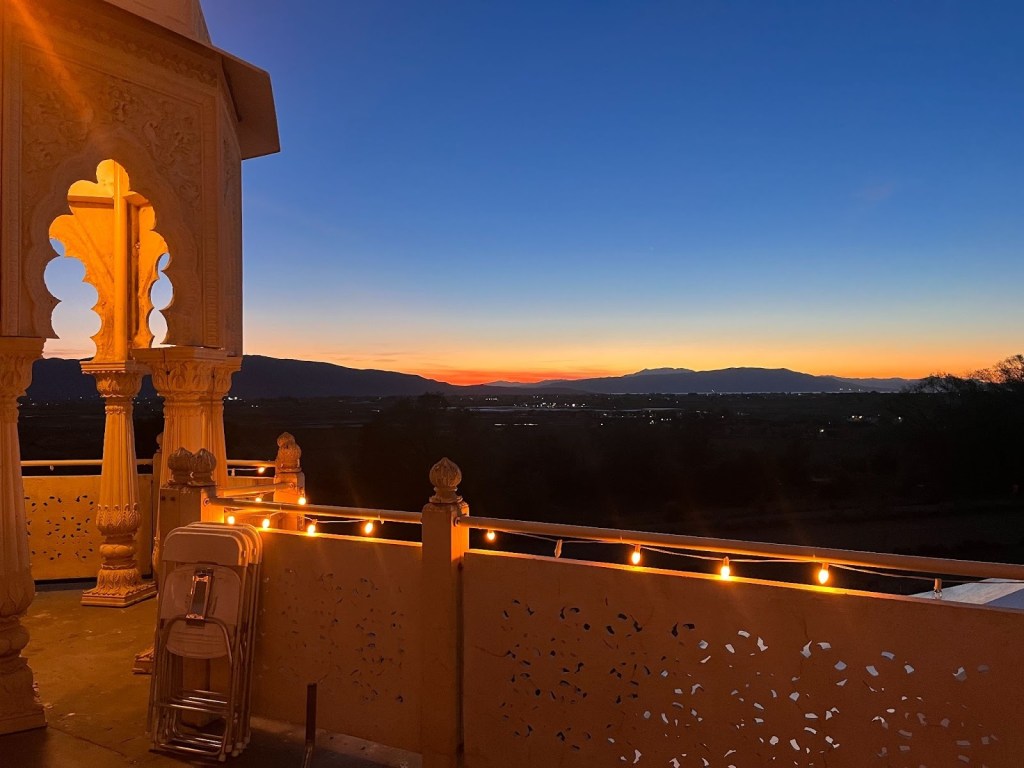
Succumbing to this rhythm revealed secrets of its own – the beauty surrounding me intensifying as I settled in this now familiar world. I felt the world responding back to me. Skies displaying its brightest stars and the most magnificent sunsets when I made the choice to go to the patio of the temple and indulge my senses in the unfurling dusk. Or the heavy, chilling winds calming down enough to let me take a stroll and greet the budding jasmines, which were primarily being grown to serve as offerings at the altar. Or a fervent downpour stopping temporarily to let me return back to my cottage when I was stranded under a shed in a grazing meadow.
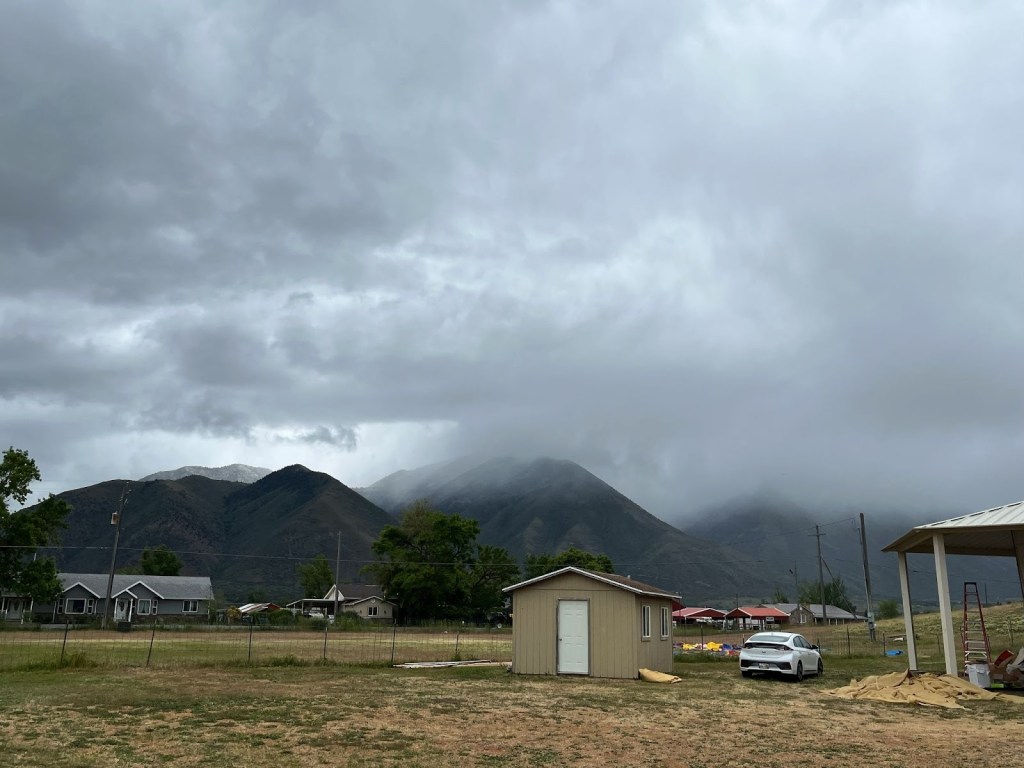
An exchange was taking place, where the physical boundaries between the land and my body disappeared. A relationship started to develop, one where I respected and admired the land, and it let me by carving paths where none existed.
I like to think that our lives are made fulfilling by the beliefs we feed into our systems, the beliefs we abide by that get us through our days.
I believe and I know, that perhaps even unconsciously, nature has always and will continue to guide me in the tiniest of ways. The direction of the wind making for the comfortable walk that suddenly changes, the sun, playing hide and seek all day along, suddenly choosing to reveal itself and envelop me with a sense of warmth during the cold winter evenings, a leaf blowing over my shoulders like a soft acknowledgment, remains of a flower in the otherwise frozen grounds sharing stories of survival, or patterns of light and shadows infusing my mind with a sense of belonging – the landscape responds to my needs, even when I am ignorant or don’t care enough to notice.
Utah made me notice. My surroundings called out to me every minute of the day, alluring me like a moth to a flame.
There were many wise people that I met in my time there, with whom I shared enriching conversations, but this is the one that will stick with me a little stronger than others.

 Bench to Books